

Snapshot
Action that changes our circumstances without handing power to an intermediary. Direct action interrupts business-as-usual, seizes leadership, and introduces an alternative narrative.
Direct action is the insistence, when faced with structures of unjust authority, on acting as if one is already free.
— David Graeber

Origins
We see instances of direct action in indigenous parables and stories, in the Bible, Torah and Koran, and in every people’s movement and popular revolution in modern history.
Direct action is at the heart of all human advancement. Sound like a grandiose claim? It is. But it’s also beautifully simple: direct action means that we take collective action to change our circumstances, without handing our power to a middle person.
We see instances of direct action in indigenous parables and stories, in the Bible, Torah and Koran, in every people’s movement and popular revolution in modern history. Direct action is often practiced by people who have few resources, seeking to liberate themselves from an injustice.
Smart direct action assesses power dynamics and finds a way to shift them.
People often conflate direct action with “getting arrested.” While sometimes getting arrested can amplify your message, or is strategically necessary to achieve your goal, it isn’t the point of direct action. (In most liberation struggles throughout history, “getting captured” is actually seen as a bad thing!)
Similarly, people often conflate direct action with civil disobedience. Civil disobedience is a specific form of direct action that involves intentionally violating a law because that law is unjust — for instance, refusing to pay taxes that would fund a war, or refusing to comply with anti-immigrant legislation. In these circumstances, breaking the law is the purpose. With other kinds of direct action, laws may be broken, but the law being broken isn’t the point. For example, we may be guilty of trespassing if we drop a banner from a building, but the violation is incidental: we aren’t there to protest trespassing laws.
While associated with confrontation, direct action at its core is about power. Smart direct action assesses power dynamics and finds a way to shift them.
One way of thinking about power is that there are two kinds: organized money and organized people. We don’t have billions of dollars to buy politicians and governments, but with direct action, organized people spend a different currency: we leverage risk. We leverage our freedom, our comfort, our privilege or our safety.
Anthropologist David Graeber defines direct action as "a form of action in which means and ends become, effectively, indistinguishable; a way of actively engaging with the world to bring about change, in which the form of the action — or at least, the organization of the action — is itself a model for the change one wishes to bring about."
As Frederick Douglass said, “power concedes nothing without a demand.” Malcolm X elaborated, “Power never takes a step back, except in the face of more power.” Rather than deferring to others to make changes for us through votes or lobbying, we seek to change the dynamics of power directly.
Real world examples
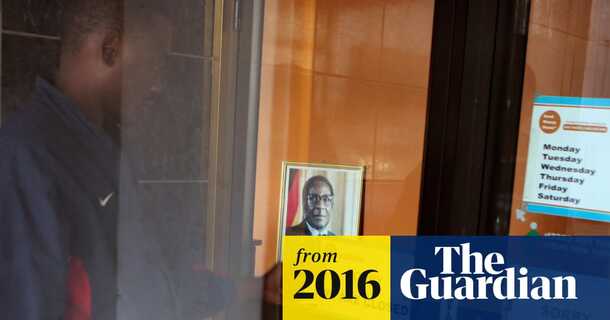
Stay-away day fronted by #ThisFlag sees foreign banks and stores close doors in Harare to protest against injustice