

Snapshot
Gerontocracy is the rule of the old over the young — a form of oppression primarily exercised across a society or culture, but sometimes also specifically within governments or other institutional structures.
It is for the elder man to rule and for the younger to submit.
— Plato
Don’t trust anyone over 30.
— Jack Weinberg

Origins
Greece (Sparta), China, Africa, Roman Empire, etc.
Gerontocracy is the rule of the old over the young. While the experience and (sometimes) wisdom that comes with age can often be important to good leadership, when rule by the old becomes entrenched, extreme, or out of touch, it can become oppressive and antithetical to democracy.
Gerontocracy does not originate in one place. Ancient Sparta was governed by a “Gerousia,” a council of men above 60 who served for life. Communist states of the far east and eastern block have been organized with similar tendencies. Numerous tribes around the world — such as Kenya’s Samburu and several groups throughout Yorubaland — place power in the hands of male elders.
The word “senate” is derived from the Latin “senex,” meaning “old man.” And in the US Senate, older generations occupy a disproportionate number of seats — one extreme example being South Carolina Senator Strom Thurmond (Sr.!) who occupied his post for nearly half a century and left office at age 100.
When rule by the old becomes entrenched, extreme, or out of touch, it can become oppressive and antithetical to democracy
Similarly, in Africa today, many dictators above the age of 70 have been in power for decades. Robert Mugabe, one notorious example, was forced to resign in Zimbabwe at age 93 after 37 years in power.
And in many African countries, power centralized in the head of state is reinforced by gerontocracy in local communities, where ethnic and clan leaders can easily be bribed, manipulated, or coerced by those in power to solicit (or coerce) votes for politicians. Even within the civil society organizations that are supposed to be a progressive counterweight to gerontocratic systems, gatekeepers to donor funding are often older men.
Gerontocracy is also entrenched in culture, not just in governments. “Obey your elders,” is a worldwide mantra. Even so, wherever old executives and politicians stand in the way, strategies for achieving change must enable youth to take power.
Such was the case in Burkina Faso during the youth uprising of 2014, when young Burkinabes marched on Parliament and sparked regime change. The next day they were in the streets, cleaning up the mess they had made, and rebuilding their society.
According to the last available data, 13 countries’ populations — all of them in Africa — have median ages below 18. This means that the majority of these populations are not afforded the right to vote. Niger harbors the world’s youngest population, with a median age of 14.8. Nigerian President Mahamadou Issoufou — born in 1951 — is calling the shots for generations he cannot possibly understand. Lowering the voting age to 16 would be a progressive step toward putting power in the hands of youth.
Movements might also look internally at their own demographics. Are youth empowered to make decisions? Are more experienced organizers investing time to mentor newcomers? Such considerations can strengthen any movement’s power.
Everywhere, not just in Africa, old and entrenched leaders are failing to make decisions to protect future generations — notably, from the catastrophic effects of climate change. The future is in jeopardy, and since it in the young that will have to live in it (see: PRINCIPLE: Follow the lead of the most impacted), they are the most motivated to solve problems adults have been putting off.
Real world examples
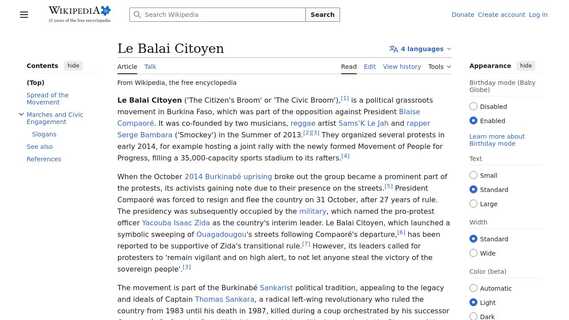
A youth-led civic movement in Burkina Faso was key to the 2014 overthrow of dictator Blaise Compaoré, who had been in power for 27 years.
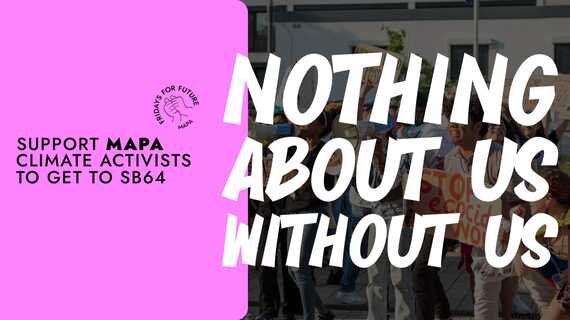
Over 1.6 million students went on strike from school, demanding immediate climate action from leaders.
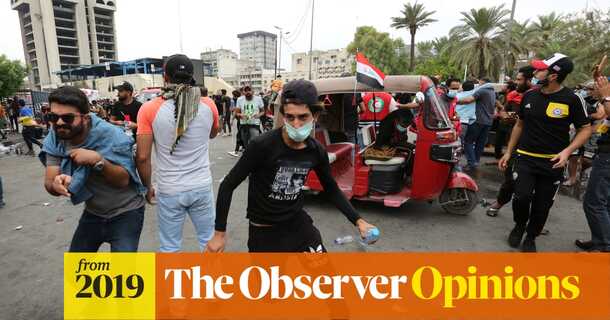
Youth are rising up from Chile to Hong Kong. Elders must appreciate them.

Gen Z lashes out against outdated politicians holding them hosting.