From Beautiful Trouble to Beautiful Solutions: Playtesting a Better Future
For more than a decade, Beautiful Trouble has worked with movements around the world to turn the hard-won wisdom of creative resistance into tools people can pick up, remix, and put to work. Our books, card decks, trainings, and evolving online toolbox offer a pattern language for people-powered change. We put the agency in your hands. Instead of writing recipes to follow, we share the principles, practices, tactics, and stories that spark strategic action in wildly different contexts.
Beautiful Solutions: A Toolbox for Liberation, the newest addition to this ecosystem, asks us to widen the aperture. Alongside resisting and disrupting unjust systems, how do we build the alternatives we need? Across land and housing, health and care, energy, finance, governance, food, education, and more, Beautiful Solutions gathers patterns and stories from communities already experimenting with more democratic, equitable, cooperative, and life-affirming ways of meeting our needs.
Practicing for the World We Want
We were thrilled when the Center for Cultural Innovation (CCI) approached us about putting Beautiful Solutions at the heart of a daylong gathering of more than 150 artists and cultural practitioners in Berkeley, California in August, 2026. CCI imagined the day as a collective reworking of the familiar board game Life: What if, instead of winning through individual accumulation, we rewrote the rules around collective flourishing?
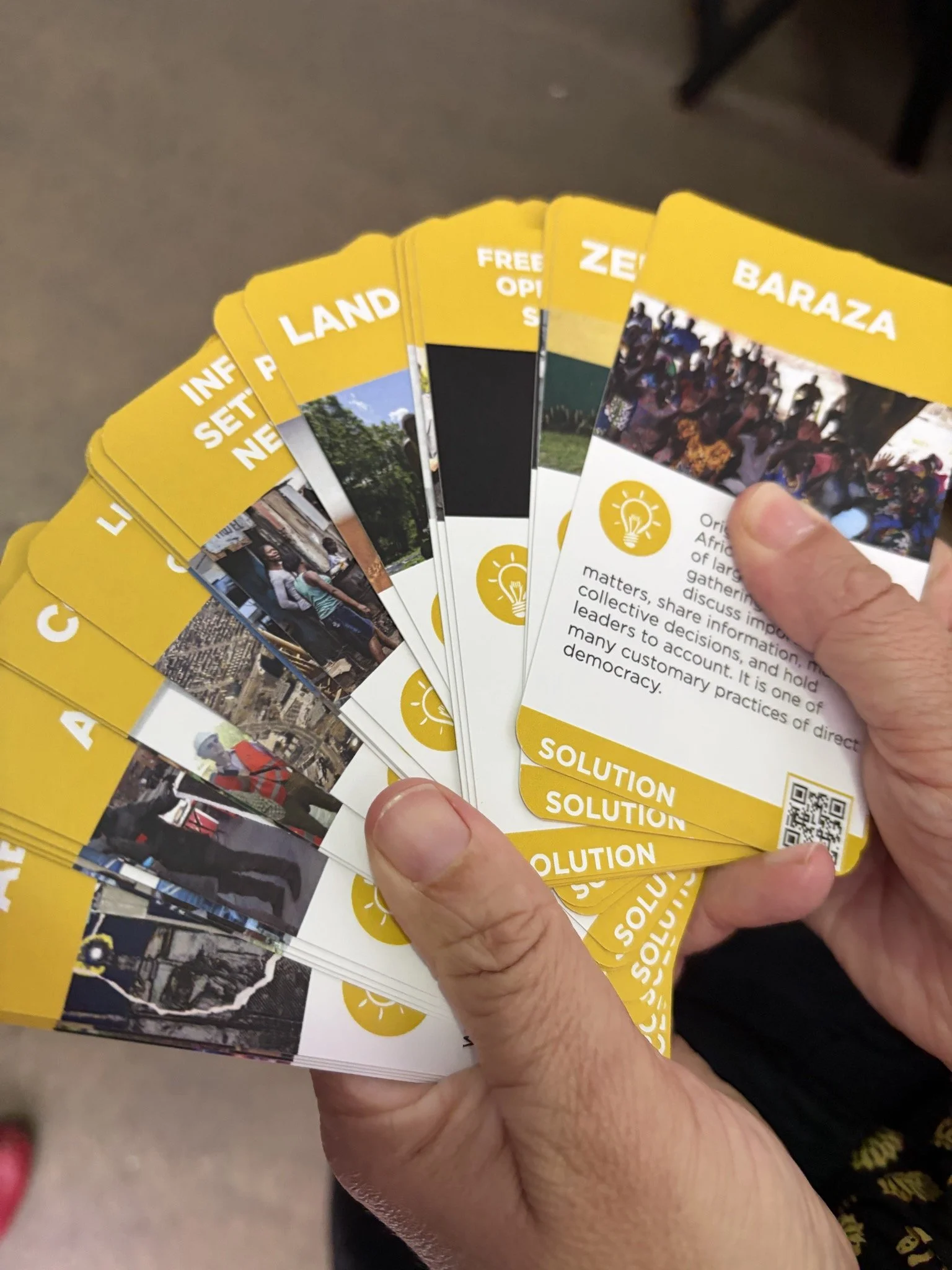
Beautiful Trouble's training team worked with CCI to adapt BT and Beautiful Solutions tools for the gathering, and BT trainer Ariel Vegosen joined the facilitation team to bring the experiment to life. The gathering also gave us the perfect opportunity to pilot something brand new… the first-ever Beautiful Solutions cards! These were created by drawing on the book's Values, Principles, Questions, and Solutions. Each card also linked participants via QR codes to our growing online toolbox.
As with all good experiments, we didn't know exactly what would happen. Here's Ariel's report from the room, in her own words.
CCI Creates Beautiful Solutions to Reimagine Life
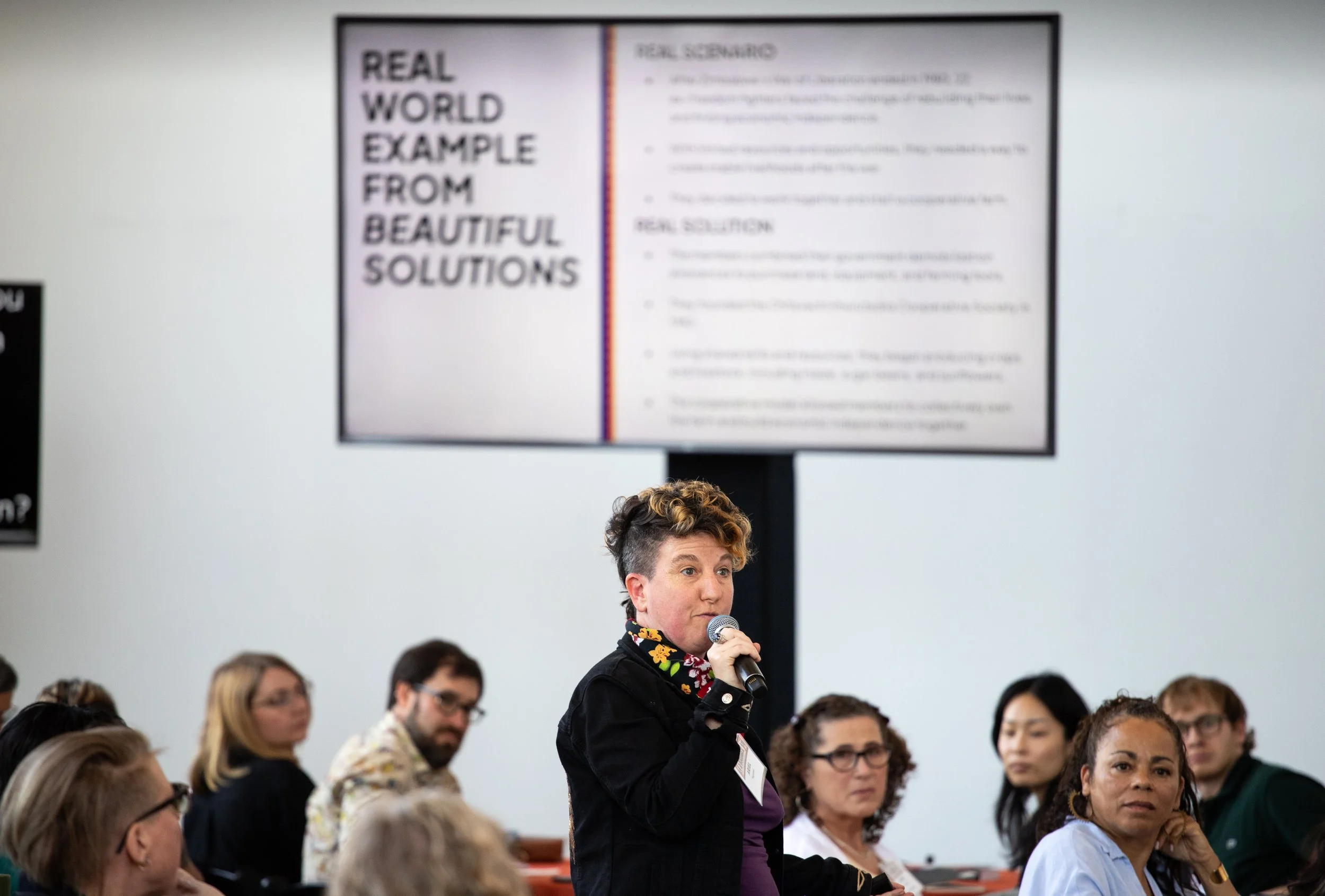
I had the honor of serving as lead facilitator for a convening centered on Beautiful Solutions, bringing together a diverse group of artists, organizers, educators, researchers, and community leaders to explore a shared question: What if the goal wasn’t individual accumulation, but community flourishing?
Hosted by the Center for Cultural Innovation (CCI), the gathering created space to examine how we can move beyond systems that produce inequity and begin imagining—and building—the alternatives we want to see.
From Resistance to Building
The Beautiful Solutions portion of the day invited participants to make a shift from resisting what we don’t want to building what we do. Using tools from Beautiful Solutions—including, for the first time ever, a brand-new pilot card deck—I facilitated a World-Building Design Lab focused on four areas of life: land and housing, health and care, utilities and energy, and finance.
Each group was given a real-world challenge and invited to imagine the future they wanted to create, explore the obstacles in their way, articulate a mission, and design a beautiful solution rooted in the Values and Principles of Beautiful Solutions. They also considered the people and relationships necessary to bring their ideas to life.
The process connected back to our larger experiment of reimagining Life:
If we can change the rules of a game, what becomes possible when we begin changing the systems and structures that shape our communities?
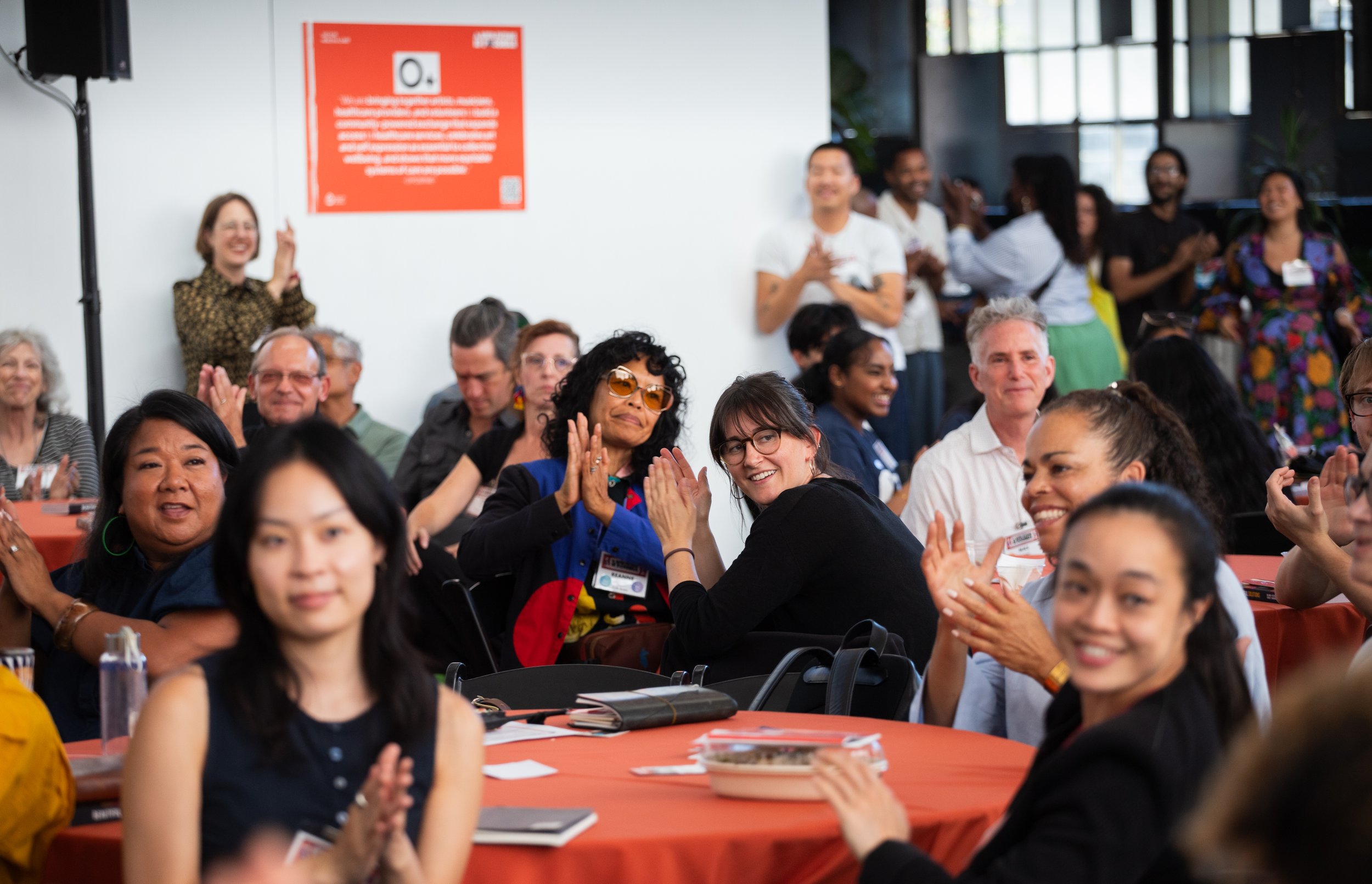
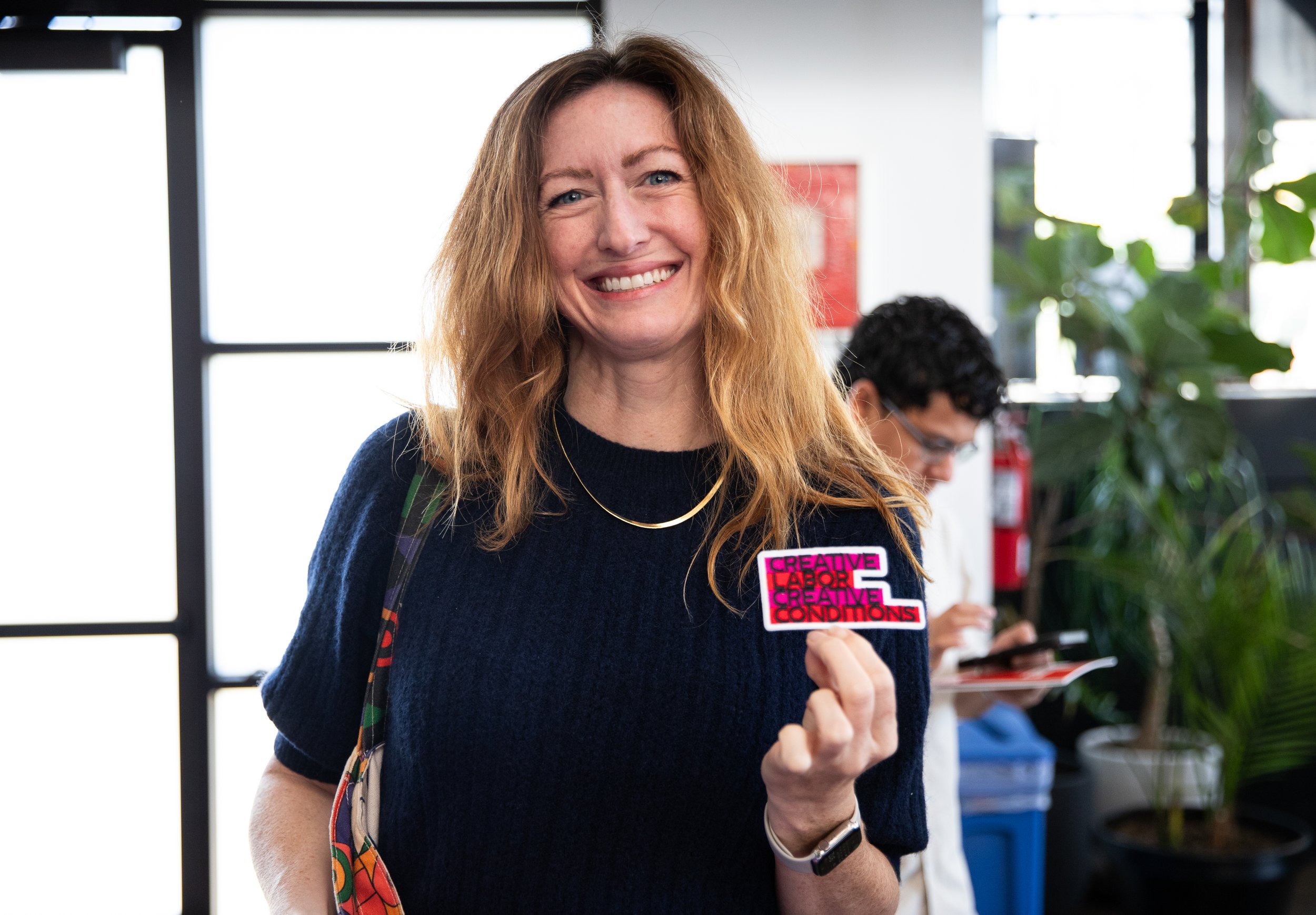
The new Beautiful Solutions cards proved to be a powerful tool for that exploration. Participants enthusiastically experimented with the Values, Principles, and Solutions, using them as prompts to imagine different possibilities. The response was so enthusiastic that many people wanted to take the card decks home with them!
From What Already Exists to What Could Be
One of the most meaningful aspects of the day was seeing the room move from imagining possibilities toward developing concrete strategies.
Earlier, the Solidarity Fair had introduced participants to organizations already creating alternatives across art and culture, education, food and agriculture, worker ownership, finance, land and housing, mutual aid, and energy. The Design Lab gave us an opportunity to build on those examples—to imagine not simply how to navigate the world as it exists, but how we might create something different.
That connection felt essential. We weren’t asking people to invent utopia from scratch. The room was already filled with examples of communities doing this work now. The challenge was to learn from those examples, recognize the patterns within them, and imagine how they might be adapted, combined, or transformed in another place.
Beautiful Solutions Can Be Messy Solutions
Importantly, building alternatives does not mean finding perfect answers. One participant offered a reflection that has stayed with me: sometimes they aren’t Beautiful Solutions; sometimes they’re Messy Solutions.
Transforming systems is complex. Solutions evolve, encounter obstacles, create new questions, and contain contradictions. The work asks us to experiment, learn, adapt, and keep building together.
Reimagining the board game Life gave us a shared cultural entry point into that work, while Beautiful Solutions offered a pattern language for turning imagination toward action. The day was a reminder that another world doesn’t have to begin as an abstract idea: communities are already building it, and each of us can become part of that work. Reimagining the board game Life gave us a shared entry point into that work, while Beautiful Solutions offered a framework for turning that imagination into action.


What We’re Learning
For the Beautiful Trouble team, this gathering was also an experiment in translating the ideas of Beautiful Solutions into a participatory training methodology—and it left us with plenty to keep exploring.
We were reminded that designing solutions takes time. Imagining a new institution, system, campaign, or way of meeting community needs asks something different of participants than rapidly prototyping a creative action. Groups wanted time to understand one another, wrestle with the challenge, imagine possibilities, and then work an idea through.
We learned that the Values and Principles explored in Beautiful Solutions can open up bold, visionary thinking. Rather than acting simply as “constraints,” they gave participants permission to imagine what systems could look like if they were actually designed around shared power, equity and justice, right relationship, the commons, care, and collective flourishing.
We also learned that the barriers, contradictions, and inevitable messiness of building alternatives deserve a place in the process. A future iteration might ask participants not only What would your beautiful solution look like? but also:
What happens when it meets the world as it is?
What power stands in the way?
What will you have to organize, disrupt, negotiate, or transform to make it possible?
And perhaps most excitingly, participants wanted to apply this process to real challenges in their own communities. We’re curious about future Beautiful Solutions Labs where practitioners bring something they are actually trying to build and use the collective wisdom of the room—and the Beautiful Trouble and Beautiful Solutions toolboxes—to help move it forward, which feels like fertile ground for what comes next.
Bring Beautiful Trouble + Beautiful Solutions to Your Community
People are hungry not only for tools to resist what is harming us, but for opportunities to practice building what comes next.
That’s what Beautiful Trouble trainings are designed to do: create participatory spaces where groups can draw on movement wisdom, experiment together, and apply what they learn to the challenges they actually face. Our global network of trainers offers customized, experiential learning rooted in popular education, ranging from short workshops and webinars to multi-day intensives and deeper strategic support.
And as this CCI gathering demonstrated, we’re excited to keep experimenting with ways to bring Beautiful Solutions more deeply into that work—through world-building labs, solutions design, card-based activities, and customized sessions that connect making good trouble with building beautiful alternatives.
Want to bring a Beautiful Trouble or Beautiful Solutions workshop, World-Building Design Lab, or customized training to your organization, movement, classroom, or community?
Request a Beautiful Trouble training here!
Bring us your challenge. We’ll bring the toolbox. Together, let’s see what beautiful—and beautifully messy—possibilities we can build.