

Snapshot
Grassroots leaders around the world must support each other to set local and global guidelines for NGO intervention in order to guarantee sustainable community empowerment and leadership.
The road to hell is paved with good intentions.
— Proverb
Around the world, grassroots movements are facing a common—if somewhat ironic—challenge: the ways in which foreign NGO funding, power, and influence are distorting the democratic pursuit of social justice. In many of the world’s most vulnerable regions, NGOs often dominate services far beyond their original humanitarian mission, systemically disempowering community leadership, and shrinking political space.
Wittingly or unwittingly, NGOs act as the “good cop” of corporate globalization, contributing to shrinking democratic space and restricting social movements around the world to reformist, short-term initiatives.
Grassroots leaders across the world are increasingly working to name and resist this power. Under the banner of “solidarity, not aid,” they are taking creative steps to rebalance the relationship, including: Principles of Solidarity, bottom-up vetting, Terms of Reference Freedom, dignified grantmaking, and strategic plans.
The problem with “aid”
Since the mid-1980s, with the neoliberal shift toward globalized markets and a shrunken role for governments, the original limited mandate of Non-Governmental Organizations (NGOs) as “temporary” agencies assisting in times of crisis has morphed into something larger and more pernicious. Often hailed as indispensable saviors, NGOs hold increasingly significant governing responsibilities, going beyond emergency humanitarian assistance to provide ongoing education, healthcare, economic development, and even infrastructure in regions most affected by poverty, war, and climate change. These NGOs frequently supplement – if not replace – national or local government in policy development and service delivery. Thus, governments shrink as open market trade takes over, and NGOs take up the delivery of services that can’t be made profitable in a grand gesture of benevolent colonialism.
Social movements are caught in a privatized system and rely on NGOs for funding and professional support. Whether in Harare, Ramallah, or New Orleans, social movement leaders, and community organizers must often partner with large NGOs to fulfill important development programs affecting working people and the most disenfranchised. If Ché were to launch a revolution today, he’d probably start by writing a grant proposal (…and end up as a disillusioned country director overseeing the distribution of medicine to impoverished campesinos).
State, corporate, and individual funders are integral in determining the agenda of NGOs. In turn, NGOs determine much of the agenda for community-based organizations, thus influencing social movements on the ground. Systemic issues, such as economic reform and long-term political change, take a back seat to short-term priorities. Funds are restricted to earmarked projects, transforming social movements into compartmentalized, professional project-based initiatives. Money is doled out to organizations based on issues and causes that sponsors prioritize as important. This year it might be AIDS awareness, the next year, women’s rights, and the next, hunger. As a result, local social movement goals are contorting to foreign NGOs’ funding criteria and reporting requirements.
Social movements are caught in a privatized system and rely on NGOs for funding and professional support.
Taken as a whole, this is the phenomenon Arundhati Roy has described as “the NGO-ization of resistance”: NGOs, she says, are “what botanists would call an indicator species. It’s almost as though the greater the devastation caused by neoliberalism, the greater the outbreak of NGOs.” A common symptom of this “NGOization” is the systemic survival mode community-based organizations feel daily. While foreign NGO employees are guaranteed consistent salaries, workers’ rights and benefits, their local project counterparts must fundraise constantly. Meeting the demands of grants often requires the bulk of staff administrative time, preventing leaders from engaging in their primary roles as community organizers and grassroots campaigners. Short-term, project-based funding causes employment instability, degradation of workers’ rights and further narrowing of vision. And, of course, the very real anxiety of non-renewal of funding in case of administrative, professional, or differences with respect to project outcome and vision limit the organization’s ability to speak out.
Working through United Nations agencies, foreign NGOs are playing a particularly large role in local governance across the Global South. Often coordinated by the Office for Coordination of Humanitarian Affairs (UNOCHA), NGOs are undemocratically chosen to address civil, social and governmental issues (as shown in this UNOCHA map).
Some trends in the NGO sector show a shift to a more democratic way of organizing and an emphasis on putting the poor and marginalized at the centre of the work. See, for example, Civicus’ “An open letter to our activists across the globe”. But across the board, in spite of these important advances, local leadership and grassroots movements are increasingly sidelined in the delivery of vital public goods like healthcare, education, water distribution, and employment. This decision-making structure leaves long-term framework discussions in corporate boardrooms and totalitarian political regimes while working class and marginalized communities are left structurally voiceless and powerless.
As economic disempowerment, climate chaos and mass migration increase over the coming decades, grassroots leaders around the world must support each other to set local and global guidelines for NGO intervention, in order to guarantee sustainable community empowerment and leadership.
Solidarity is the answer
Grassroots leaders across the world (as well as some leading-edge NGOs), under the banner of “solidarity, not aid,” are taking steps to restore democratic control, including the following five innovations:
Principles of solidarity that set out core values and practices for democratic, grassroots-empowered, and sustainable partnerships to which NGOs and donors can be held accountable.
Bottom-up vetting that flips the script on the funding power imbalance. Essentially, it’s a way for grassroots groups to evaluate a prospective NGO partnership to ensure a strategically beneficial and empowering contract (or none at all). In several Palestinian villages, local banking infrastructure has been developed so that democratically elected councils can regulate how funds are received and used. Tindouf, the world’s second-oldest refugee camp inhabited by exiled Saharawis in Algeria, has a similar system for local governance of external funds.
Terms of Reference Freedom are being developed by grassroots organizations and movements to enable them to receive foreign financial support without unnecessary strings attached. #Anataban, a collective of South Sudanese political artists, rejects any funding that requires circulation of donor names and logos.
Dignified grantmaking is being championed by increasing numbers of small and middle-level private foundations like The Pollination Project and American Jewish World Service, who have experimented with various methods to make grants in a more egalitarian manner.
Strategic plans can help grassroots organizations in the South avoid meandering too far in the direction of foreign donor agendas, and instead only seek outside financial support directly related to their specific goals and objectives.
These five innovations are just a few of the ways the principle of “solidarity, not aid” is taking tangible form. In the years to come, additional creative efforts by both grassroots organizers and the NGOs that fund them will hopefully continue to tilt the power dynamics of international humanitarian work in a more egalitarian direction.
Real world examples
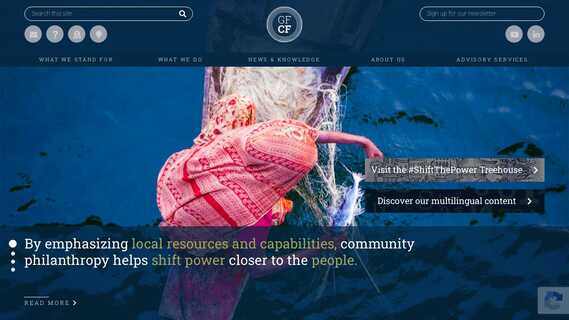
The GFCF works globally to build community philanthropy for people-led development.
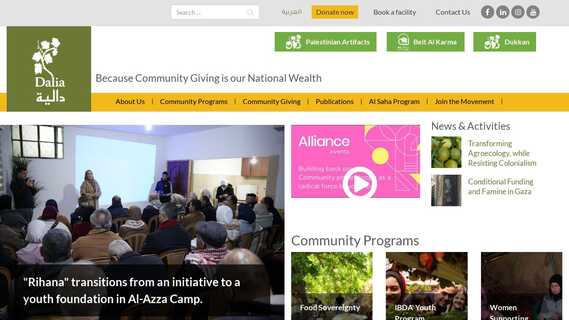
Dalia Association is a community foundation that realizes the rights of Palestinians to control their resources for community development.

In recent years, 50,000 Cuban medical experts have worked in over 60 countries in need of aid, an intervention dubbed “medical internationalism.”
The Trust-Based Philanthropy Project works with foundations to help them better support grantees in a dignifying way.