

Snapshot
The public staging of a realistic scene — say, a same-sex couple discriminated against in a restaurant — that poses an ethical dilemma and engages bystanders, who remain unaware they are part of a performance.
You’re dining in a restaurant when suddenly a lesbian couple and their two children, dining nearby, are accosted by a homophobic server. “These children need a father,” she says. “You’re making everyone else here uncomfortable.” Other customers chime in in agreement, while still others leap to the defense of the family. Some of these people are actors, the rest, including you, are unwittingly participating in an invisible theatre performance.
Invisible theatre is theatre that seeks never to be recognized as theatre, performed in a public place.
Invisible theatre is theatre that seeks never to be recognized as theatre, performed in a public place. The goal is to make the intervention as realistic as possible so that it provokes spontaneous responses. The scene must be loud enough to be heard and noticed by people, but not so loud or conspicuous that it appears staged. Bystanders can and will engage with the scene as if it were real life, because for them it is real life. Invisible theatre can thus achieve things that most other theatre cannot, removing barriers between performer and spectator, and creating very accessible conflictual situations in which people can rethink their assumptions and engage with sensitive issues they might otherwise avoid.
Invisible theatre is one of Augusto Boal’s Theatre of the Oppressed techniques, and has been used around the world in many different settings. In New York City in 2003, actors posing as tourists made loud comments about the potential terrorist threat posed by two Muslim women in hijab (also actors) who were taking photos of the Empire State Building. This scene sparked important dialogue about racial profiling and the “War on Terror.” In other instances, actors posing as customers in restaurants and grocery stores have claimed not to be able to afford their bill, sparking a dialogue with the cashier and nearby customers (some of them also actors) about questions of economic justice.
Invisible theatre requires a significant amount of preparation and rehearsal. The form requires actors to remain in character even when the action goes in unexpected and challenging directions. In its pure form, invisible theatre never lets on that it is theatre. Unlike other stealth theatre forms like guerrilla theatre, Yes Men-style hoaxes, or Improv Everywhere pranks, there is never a “reveal.” People who encounter an invisible theatre performance should experience it as reality and forever after think it was real.
Originally published in Beautiful Trouble.

Key principle
While part of the beauty of invisible theatre is its spontaneity, it is also important to anticipate and rehearse potential audience responses. It is a good idea to test out your scene with people who did not participate in its creation to see what responses it provokes. Your invisible theatre performance is only as strong as the reaction or thought process it generates in your audience.
Real world examples
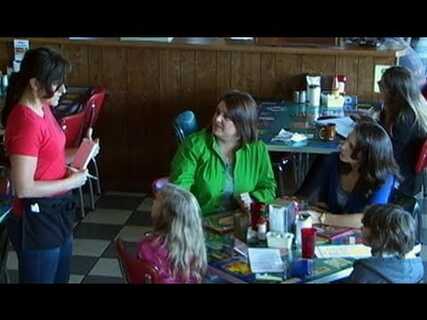
On the TV show “What Would You Do,” invisible theatre actors discriminated against gay parents, provoking a reaction from other restaurant customers.