

Snapshot
A form of bottom-up disobedience that revives indigenous ideas and lived experiences to challenge the impact of historical colonization and reverse its trajectory.

Origins
Albert Memmi, Frantz Fanon, Aimé Cesaire, Enrique Dussel, Catherine Walsh, Aníbal Quijano, Walter Mignolo, Amilcar Cabral, Rigoberta Menchú, W.E.B. Dubois.
Colonization is an historical and ongoing form of territorial, economic, and mental conquest in which one group of indigenous people (first inhabitants of a place) is subordinated and put in service to another group of people under the forces of imperialism. Decolonization is a set of ideas and lived experiences that challenge imperialism through forms of bottom-up disobedience to historical and ongoing colonization. Theories and manifestations of decolonization prioritize indigenous (non-Western) forms of knowledge, spirituality, cultural practices, and sovereignty.
Given the diversity of indigenous groups and colonized peoples around the world, decolonization frameworks and strategies of resistance vary greatly from place to place depending on the specific historical relation between the imperial power and colonized populations (e.g. colonial, post-colonial, neo-colonial). (see: THEORY: Postcolonialism)
Decolonization theory raises questions about whether or how it’s possible to use the “master’s tools” (including all the legal and theoretical concepts inherited from modernity) to dismantle the master’s house, and to construct something better.
Real world examples
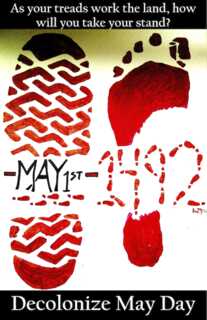
Downloadable posters that promote decolonization as part of the Occupy movement.